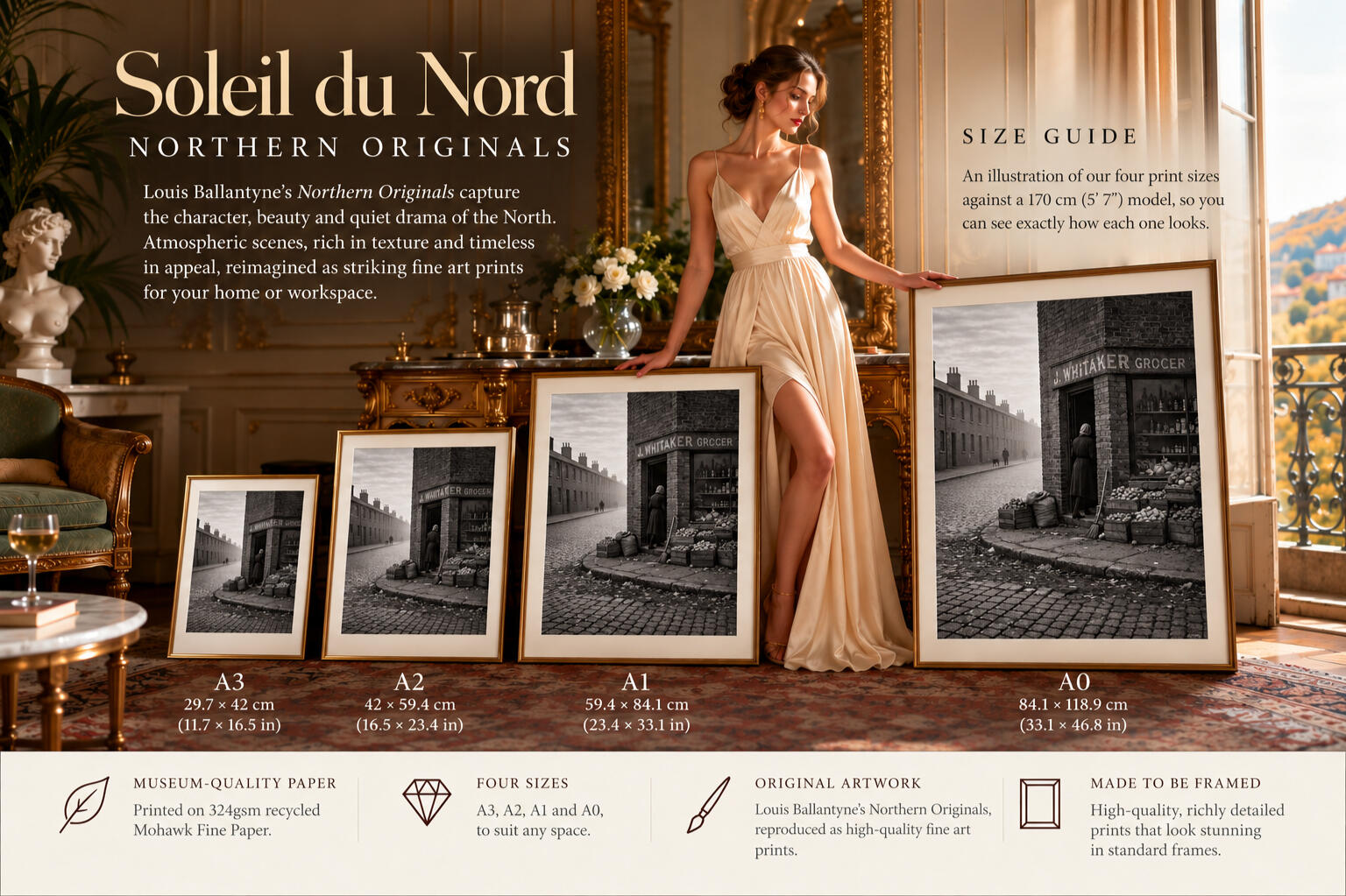
Northern Originals
Artist | Louis Ballantyne
Louis Ballantyne lived and worked in Wigan between 1957 and 1966, producing an extraordinary collection of images documenting the everyday life of the town and its people. His subjects were rarely grand: public houses, corner shops, terraced streets and the quiet, unremarkable moments that others might have passed without a second glance.In the late 1960s, Ballantyne left Lancashire to travel, beginning a remarkable journey that would eventually take him across Europe and beyond. He never returned to live in Wigan, although the town and its people remained a recurring influence on his work.Today, he lives quietly in the historic Sololaki district of Tbilisi, Georgia, where he is spending his later years surrounded by books, photographs and the accumulated curiosities of a lifetime abroad.The Northern Originals collection brings together ten works from his Wigan years, now reproduced as unframed fine-art prints on 324gsm museum-quality paper, in A3, A2, A1 and A0 sizes.EXPLORE AT YOUR LEISURE
Acquiring Your CollectionWe invite you to explore the gallery at your leisure and discover the works that speak to you.Once you have chosen your favourite, simply select your preferred print size using one of the four buttons below. You can then choose your artwork and quantities before completing your purchase securely through Stripe.Each Northern Original is reproduced on beautiful 324gsm museum-quality paper and supplied unframed in A3, A2, A1 or A0.All prices include careful packaging and delivery directly to your door, with no additional postage charges.A little piece of the North, wherever you call home.
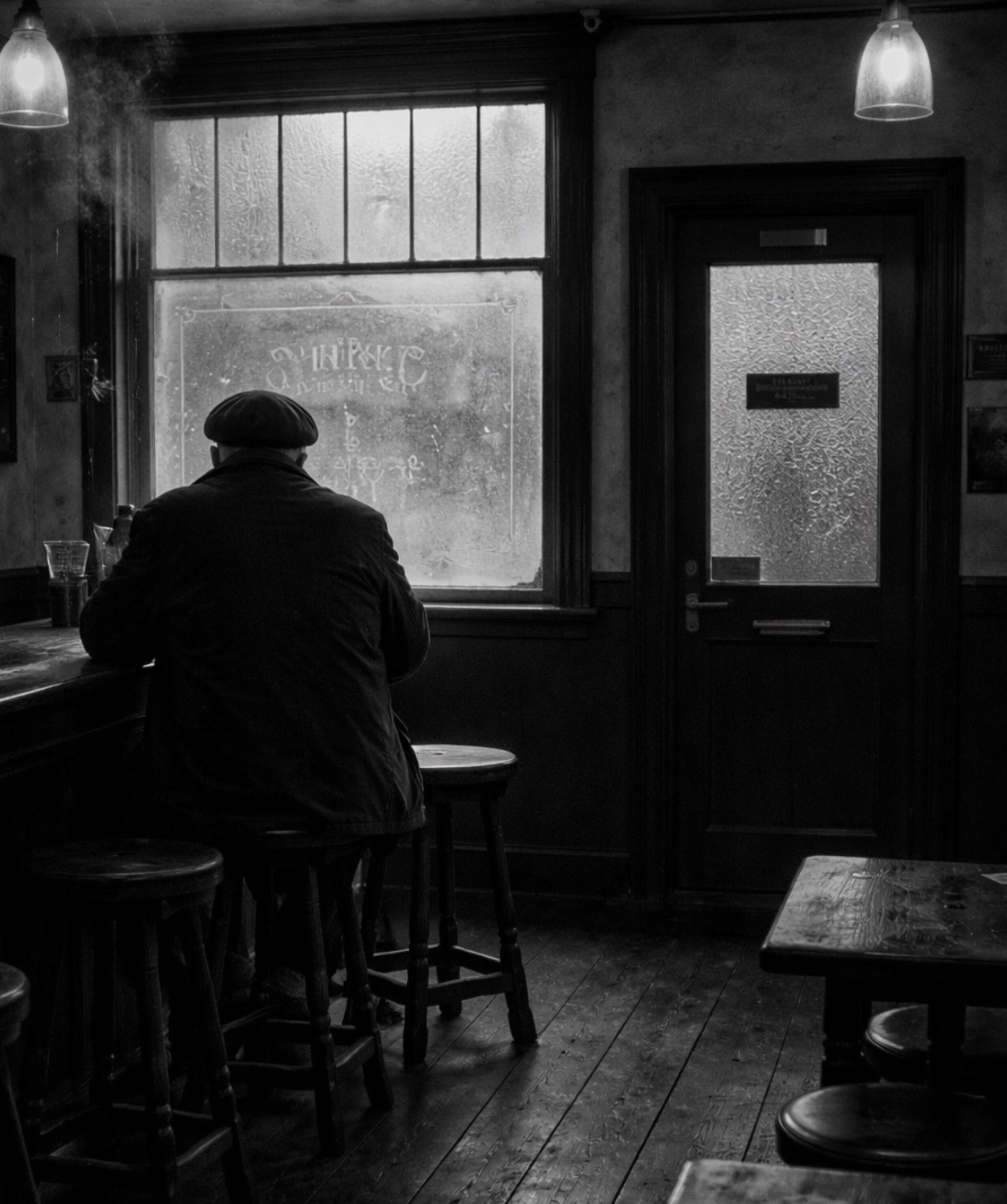
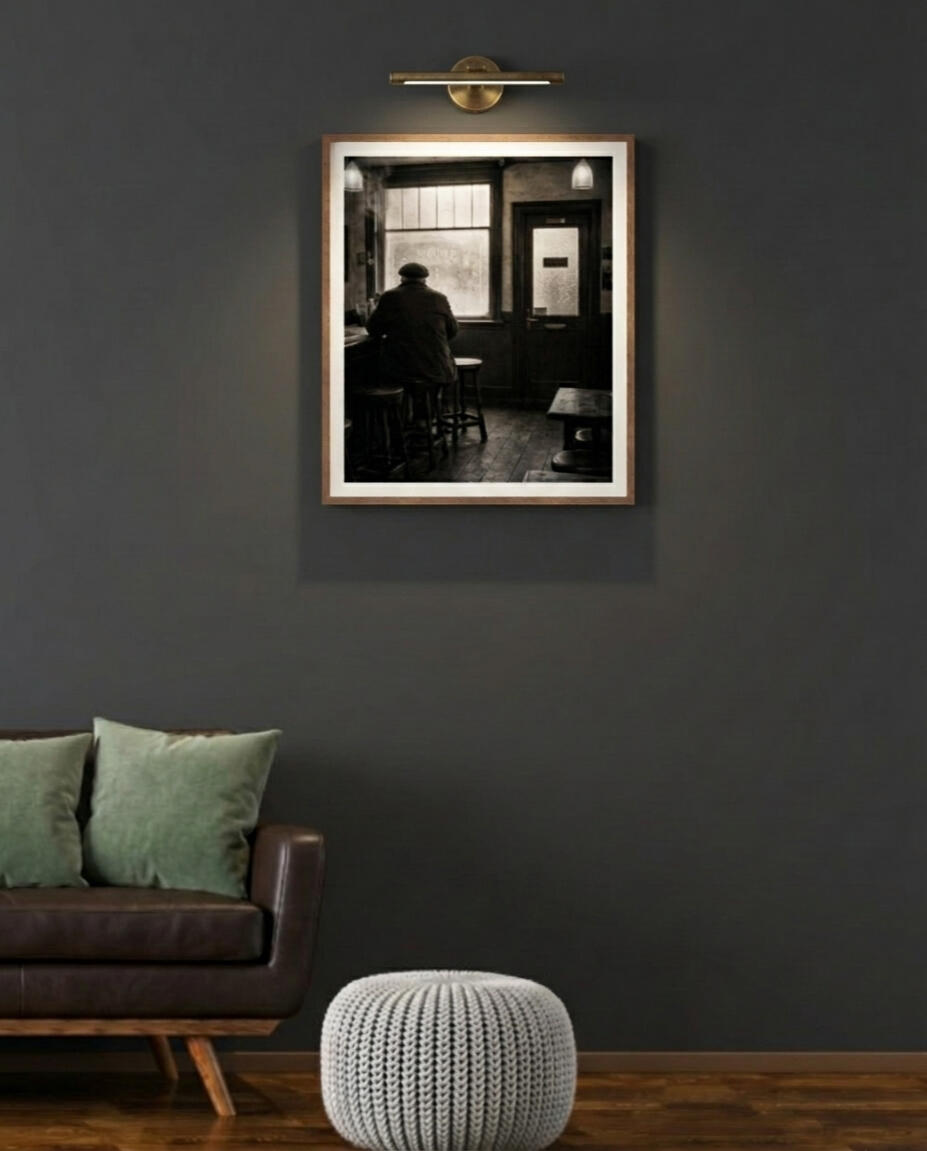
The Pub (1963)
In the company of one's thoughts
In a modest Wigan public house, a solitary customer sits beneath the soft light of a frosted window, apparently in no particular hurry to be anywhere else.Ballantyne's composition captures the extraordinary dignity of an entirely ordinary moment, finding beauty in worn floorboards, empty stools and the familiar rituals of a Northern afternoon.A study in solitude, stillness and the understated pleasures of doing very little.
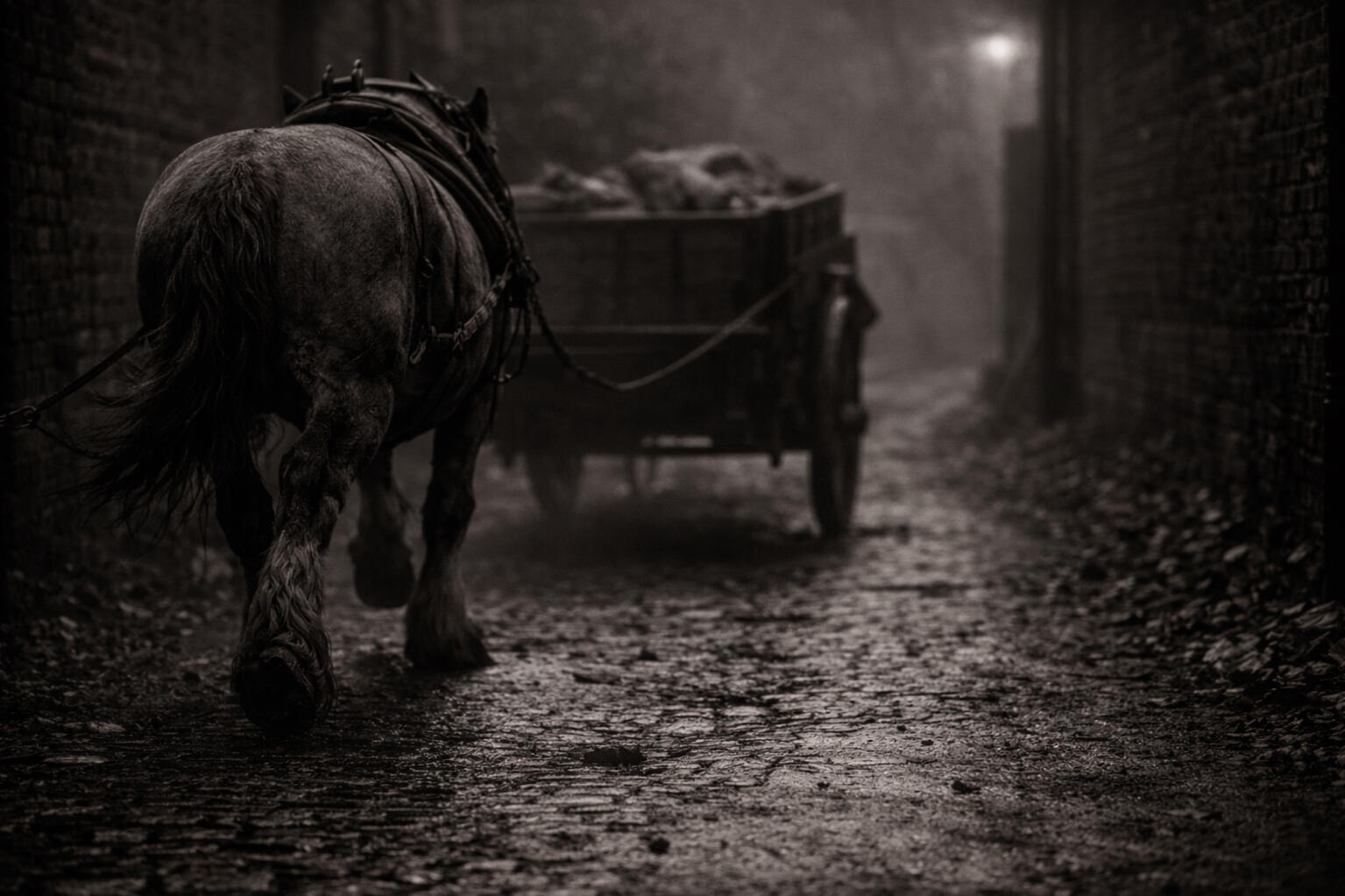
The Graft (1964)
An honest day's work
A solitary cart horse pulls its heavy load through a narrow Wigan ginnel, the wet cobblestones glistening beneath the distant glow of a streetlamp. The destination is unseen, the hour uncertain, but the labour is unmistakable.Ballantyne photographs the scene from behind, allowing the powerful animal and its burden to dominate the composition. There is no sentimentality here, merely the physical reality of a working town whose daily existence depended upon countless journeys such as this.The Graft is a quietly haunting portrait of endurance, capturing a world in which hard work was seldom remarked upon, largely because there was so much of it to be done.
The Viaduct (1964)
A world beneath the arches
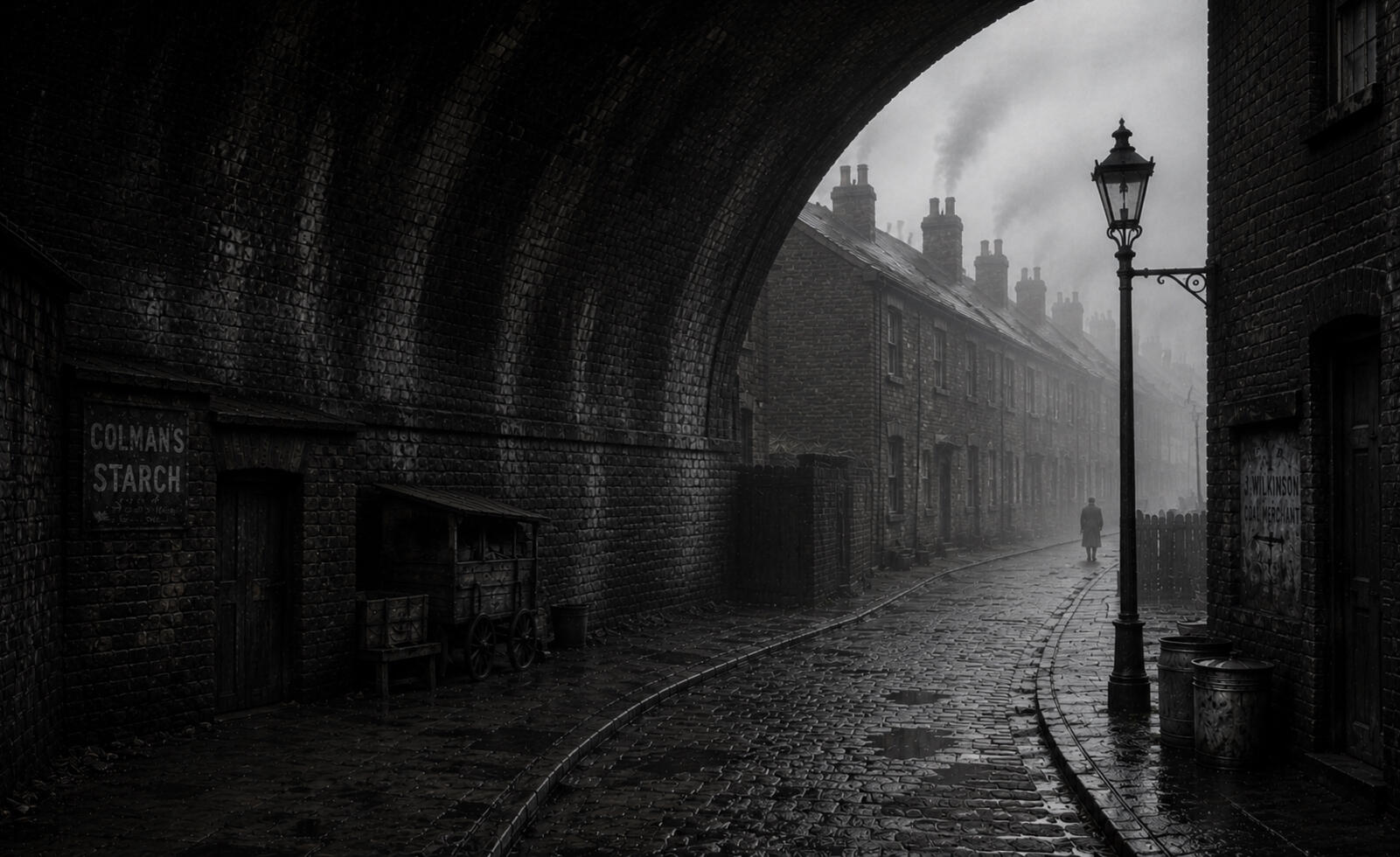
Beneath the imposing brickwork of a railway viaduct, a narrow Wigan street curves away into the mist. A solitary figure makes her way past rows of terraced houses, their smoking chimneys barely distinguishable against the pale morning sky.Ballantyne uses the immense arch to frame a scene of remarkable intimacy. The dark, rain-soaked masonry contrasts with the soft light beyond, while the gently curving street draws the eye towards a neighbourhood seemingly untouched by the passage of time.The Viaduct captures the peculiar beauty of industrial Lancashire, where monumental feats of Victorian engineering stood alongside the modest homes and everyday routines of the people who lived beneath them.
The Lion (1966)
A local institution
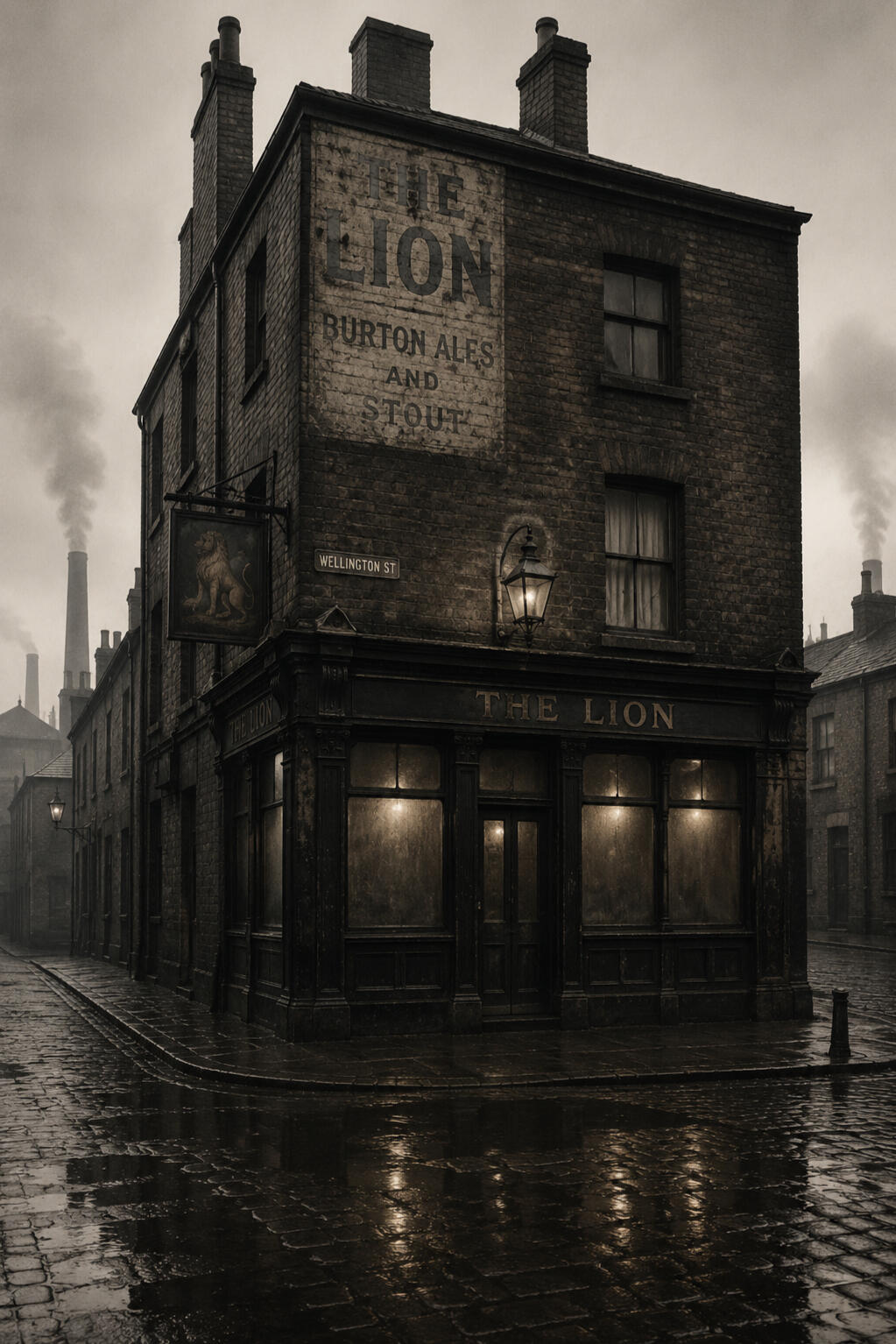
Standing on the corner of Wellington Street, The Lion presents a formidable picture of the traditional Northern public house.Its weathered brickwork, faded Burton Ales advertisement and imposing frontage speak of an establishment that has served generations of working men and women.Ballantyne captures the building on a rain-soaked day, its darkened windows offering only the faintest suggestion of the warmth within.Beyond the rooftops, factory chimneys rise into the grey Lancashire sky, placing the pub firmly within the industrial landscape that sustained it.There is something reassuringly permanent about The Lion. While the streets around it bear the marks of industry and changing fortunes, the pub appears entirely unconcerned with either.It has stood here for years, and seems to have every intention of continuing.
The Arcade (1960)
The finer things in life
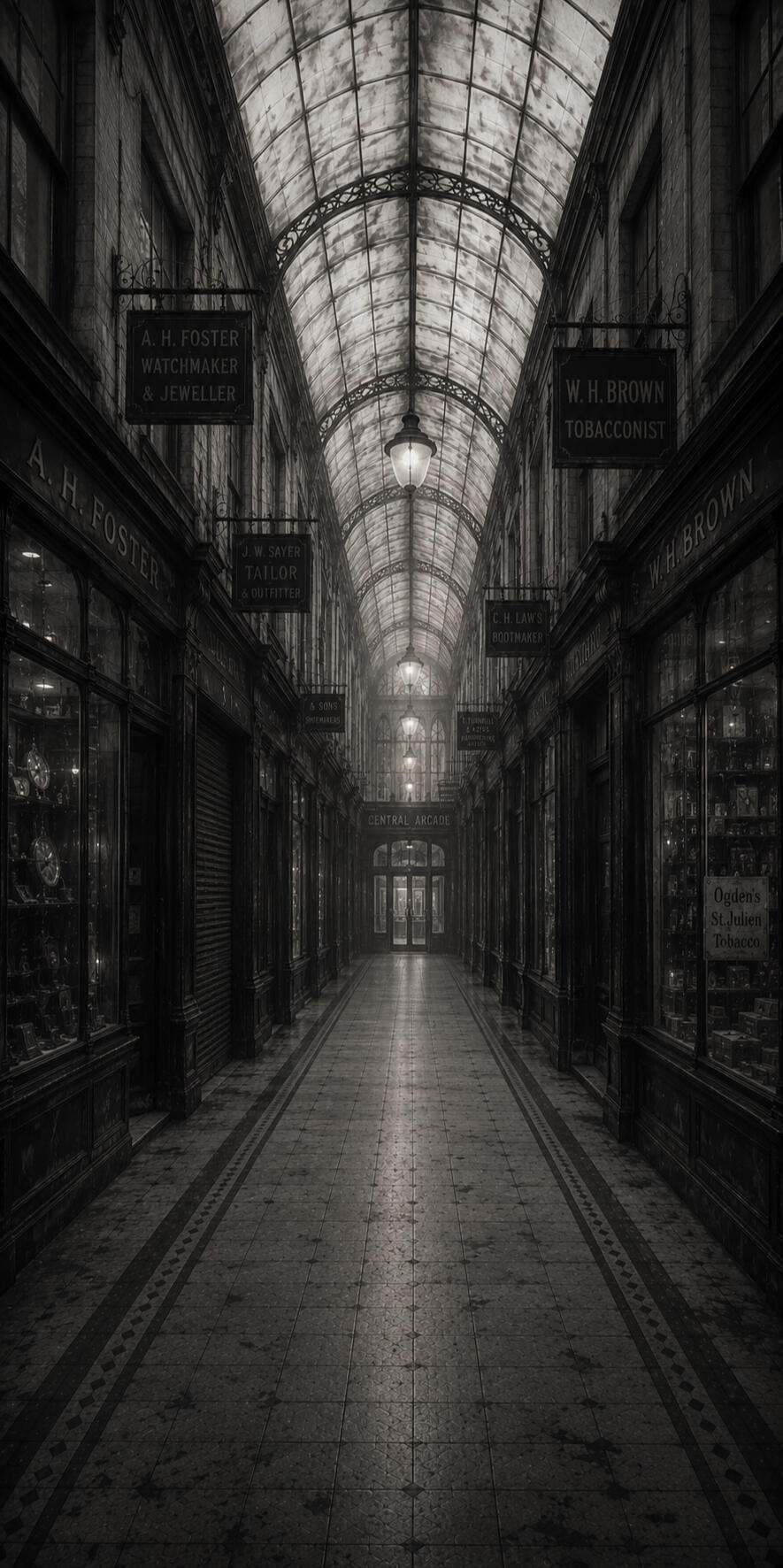
Beneath an elegant vaulted glass roof, Wigan's Central Arcade offers a glimpse of a more genteel commercial world.Watchmakers, jewellers, tailors and tobacconists occupy handsome shopfronts, their traditional signs suspended from elaborate wrought-iron brackets.Ballantyne's carefully balanced composition draws the eye along the tiled passageway towards the distant entrance.The repeating arches and softly glowing lamps lend the deserted arcade an almost cathedral-like atmosphere, transforming an ordinary shopping precinct into a place of unexpected grandeur.The Arcade is a celebration of the independent tradesmen and small businesses that once gave Britain's town centres their distinctive character.There is a quiet melancholy in its empty passageways, but also an unmistakable sense of pride in the craftsmanship and architectural ambition of an earlier age.
Found Something You Love?Select your print and preferred size, then complete your purchase securely through Stripe.
All prices include packaging and delivery to your door.
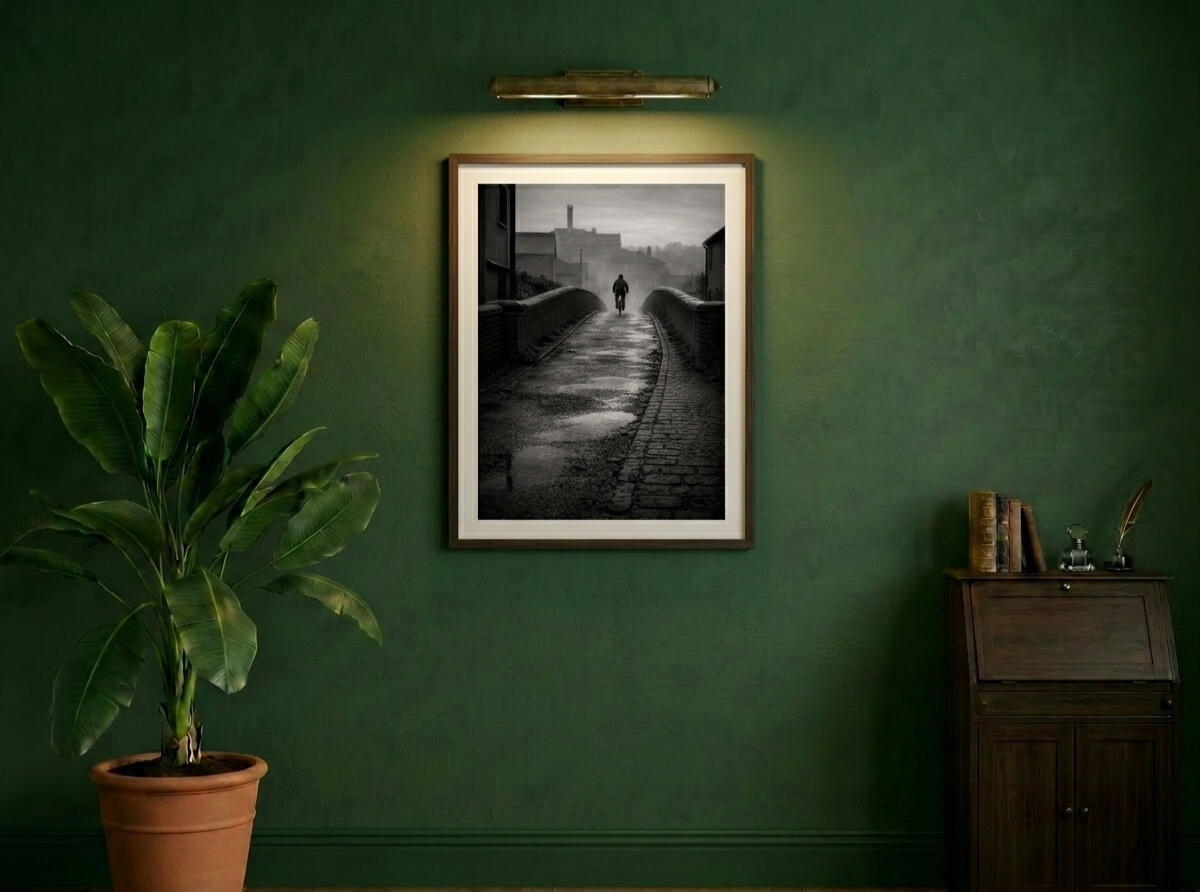
The Bridge (1962)
The journey continues
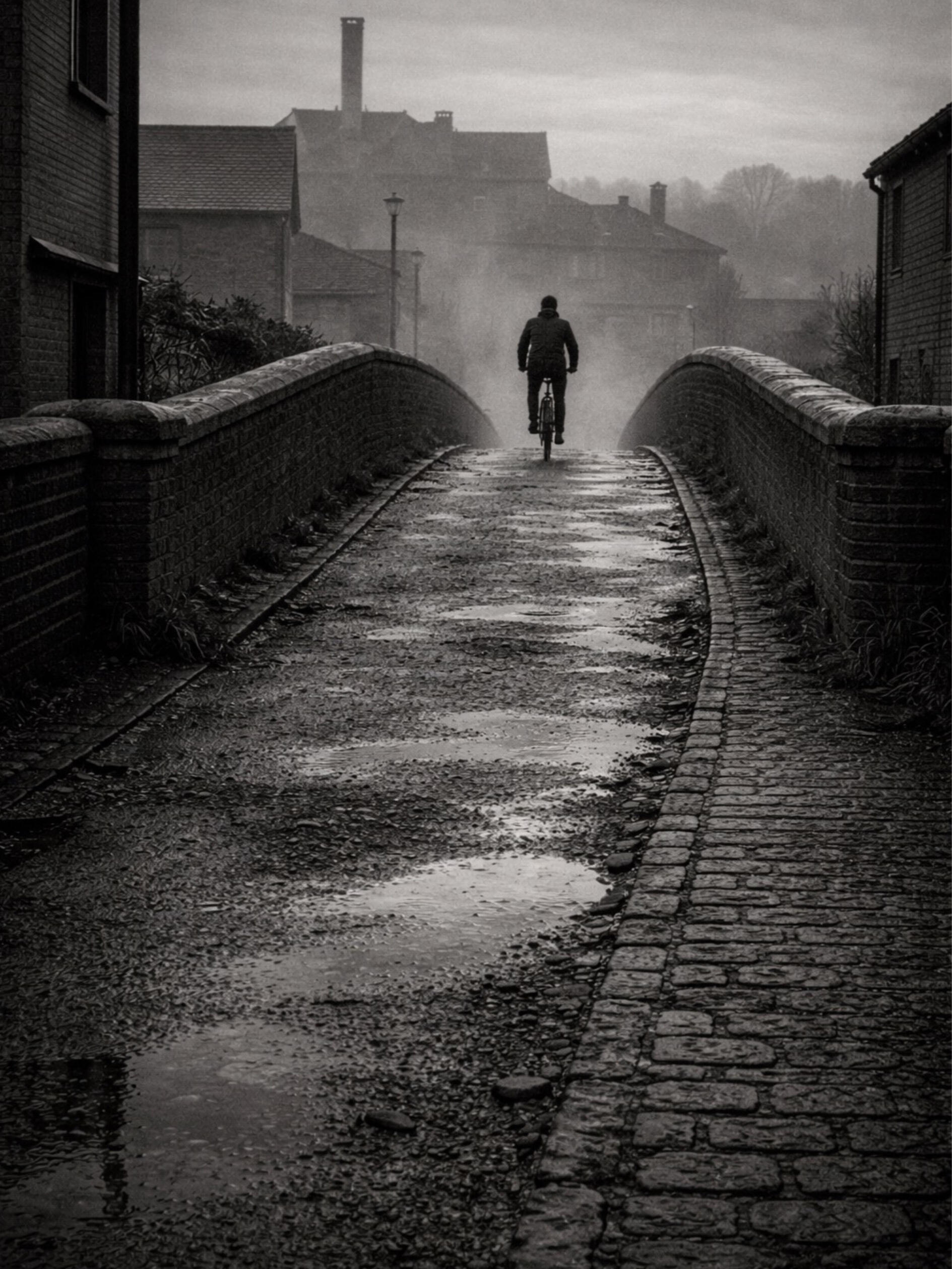
A lone cyclist crosses a modest brick bridge on the outskirts of Wigan, disappearing into the mist of an overcast Lancashire morning. Beyond him, factory buildings and distant rooftops emerge faintly through the haze.
Ballantyne positions the cyclist at the centre of the composition, where the gently rising parapets draw the eye towards the solitary figure. The wet, uneven road and weathered brickwork give the scene an almost tangible sense of cold and damp.
There is a remarkable stillness to the photograph, despite its subject being in motion. The cyclist's destination remains unknown, his journey just one of countless ordinary passages through the industrial landscape.
The Bridge captures a fleeting moment of everyday independence, when a bicycle was not a leisure accessory but an essential means of getting from one place to another.
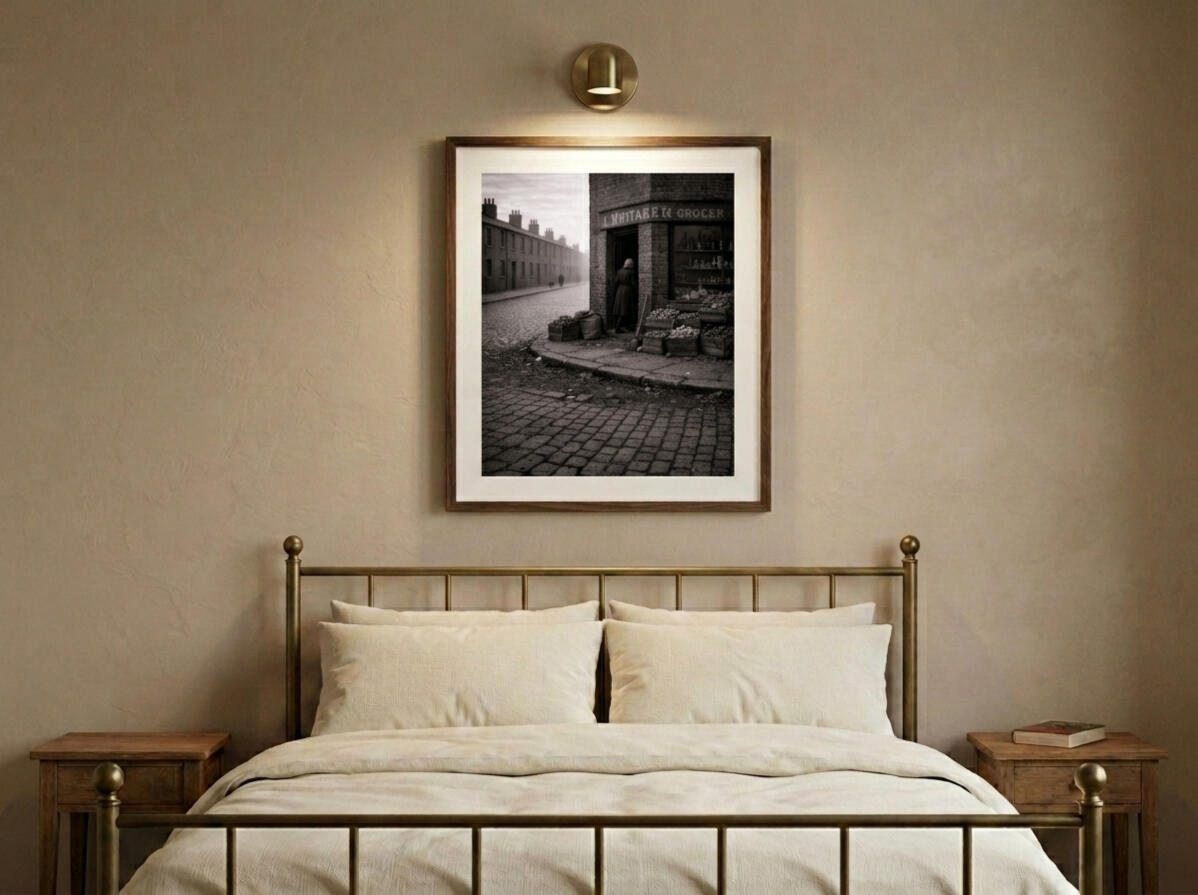
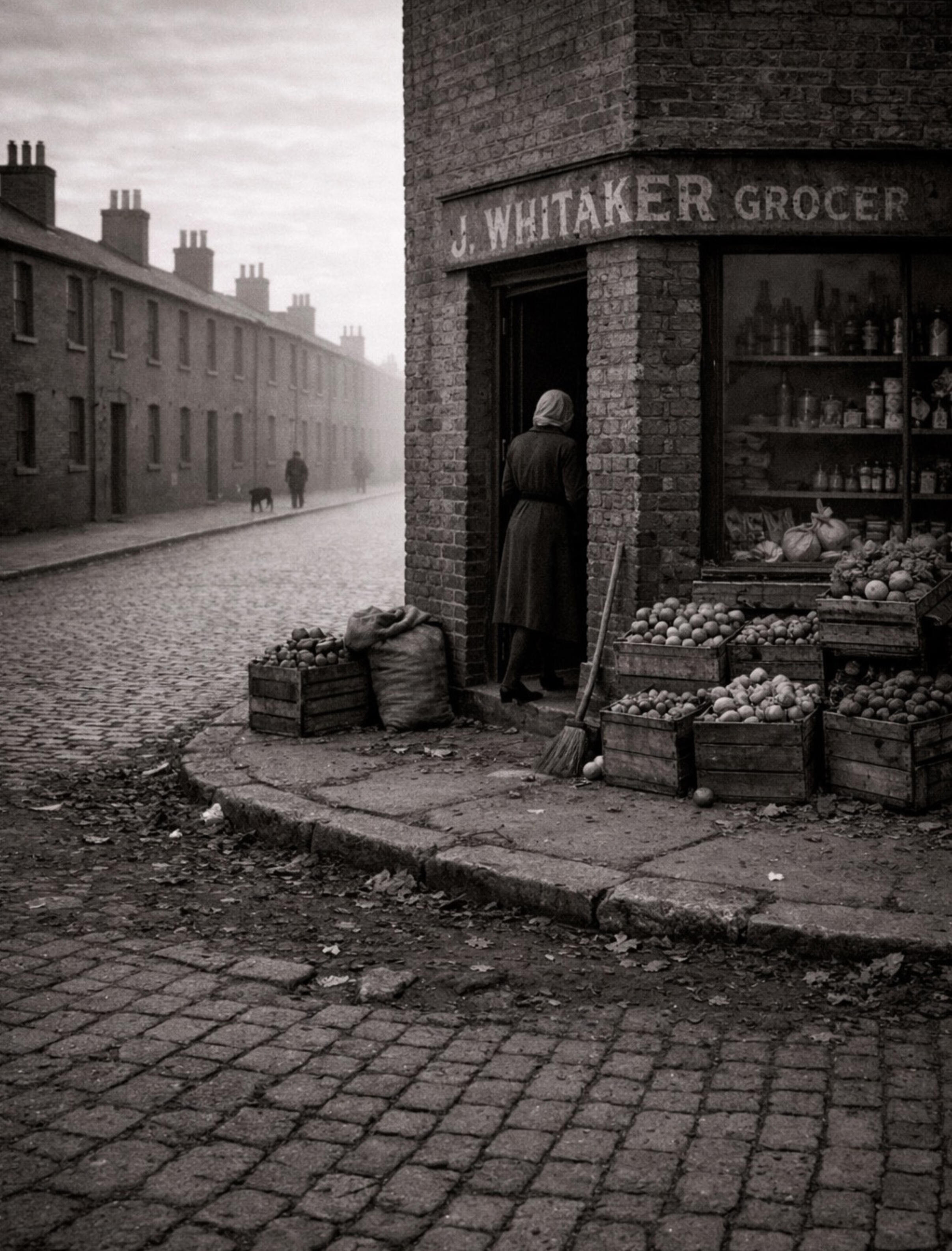
The Corner (1966)
The heart of the neighbourhood
On a quiet Wigan street, a woman steps into J. Whitaker's grocer's shop, passing wooden crates filled with fresh produce. Beyond the corner, a long terrace of modest brick houses disappears into the morning mist, with a handful of figures making their way along the pavement.
Ballantyne captures the familiar world of the neighbourhood shop, where everyday necessities were purchased within walking distance of home. The hand-painted lettering, crowded window and produce displayed on the pavement speak of a business firmly rooted in its community.
The composition contrasts the intimate detail of the shopfront with the long, almost deserted street beyond. The woman in the doorway provides a quiet human presence, linking the two.
The Corner is a portrait of a disappearing way of life, when independent shopkeepers knew their customers, shopping was a daily ritual and the corner grocer was as much a part of the neighbourhood as the houses themselves.
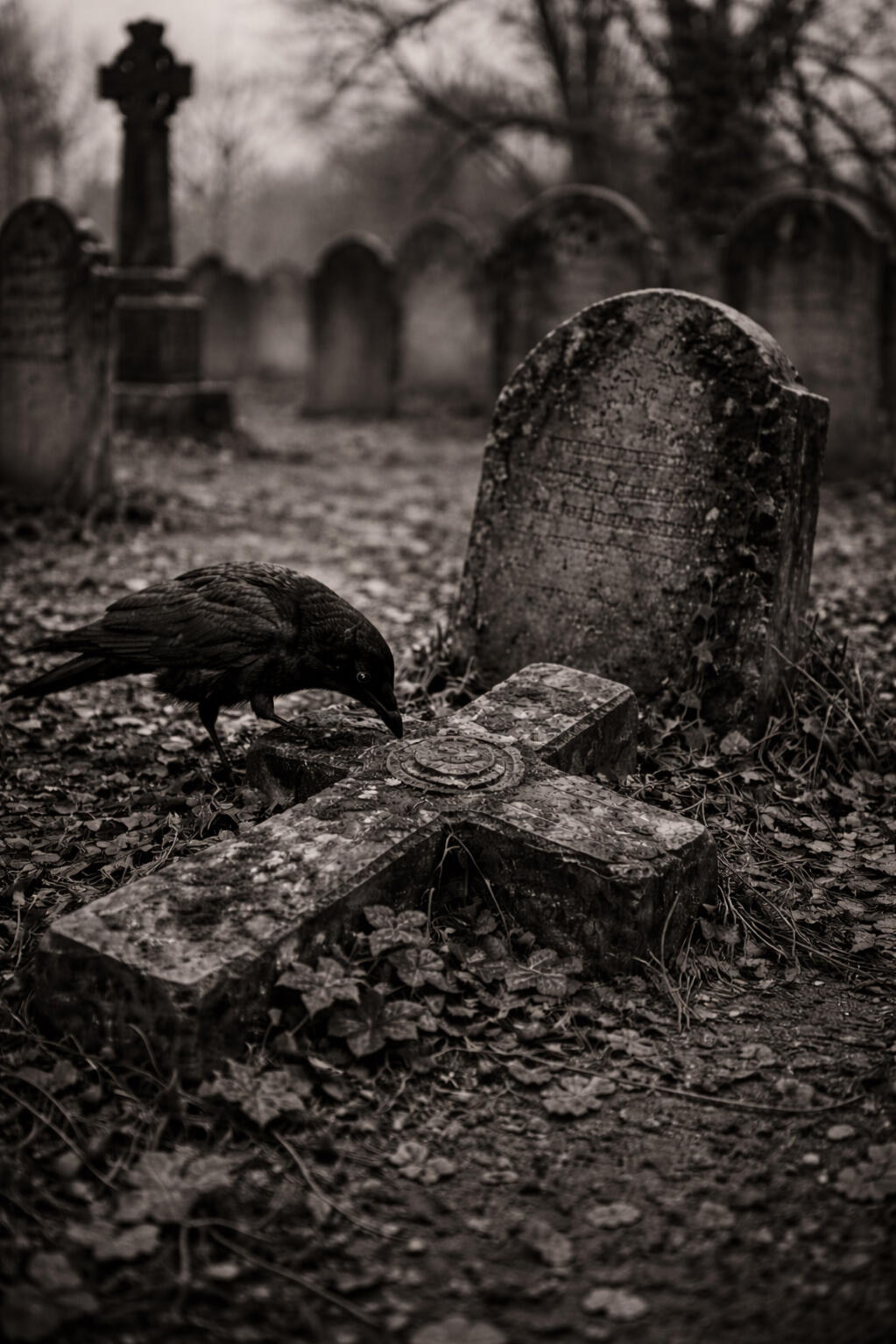
The Graves (1965)
The last resting place
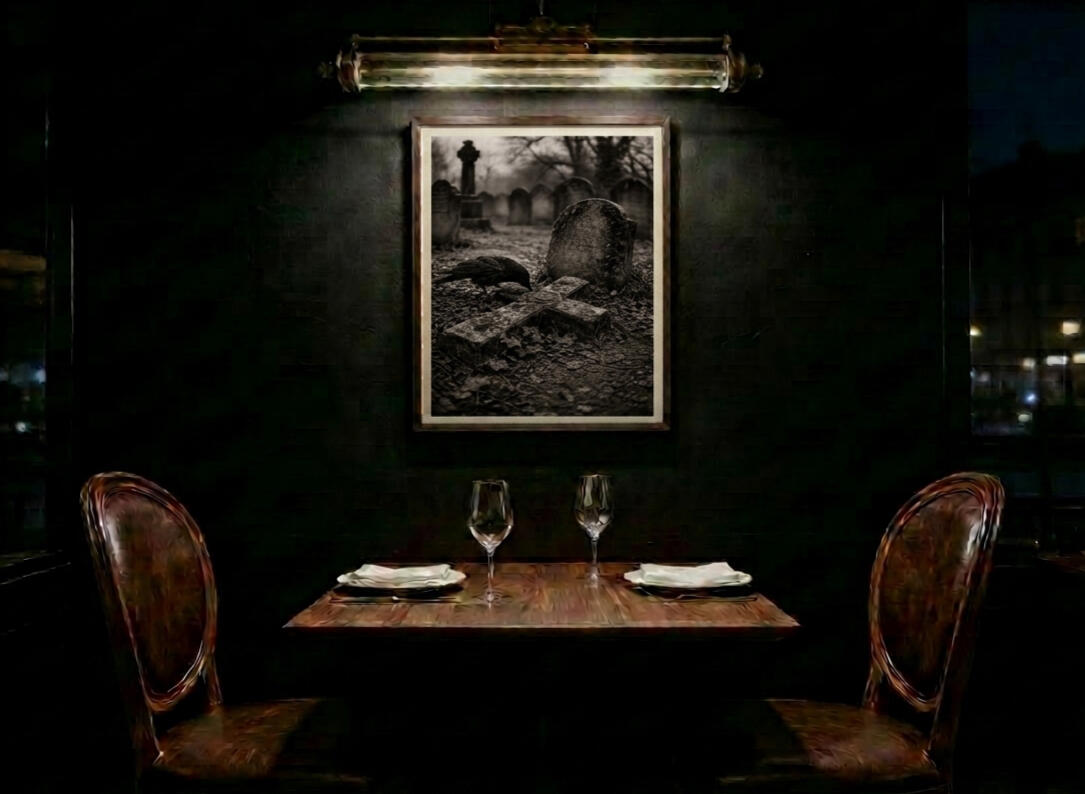
In a quiet Wigan churchyard, a solitary crow searches among fallen leaves beside a weathered stone cross. Behind it, generations of gravestones stand beneath bare winter trees, their inscriptions gradually surrendering to the passage of time.Ballantyne brings the bird and fallen cross into sharp focus, allowing the older memorials to dissolve into the misty background. The contrast between the living creature and the abandoned stonework gives the photograph an unsettling intimacy.
There is no human figure in the composition, yet evidence of countless lives surrounds the scene.The broken cross, creeping ivy and fading inscriptions suggest a place where remembrance and neglect exist side by side.
The Graves is a meditation on mortality and the persistence of nature, finding a sombre beauty in a corner of Wigan where time appears to have almost stood still.
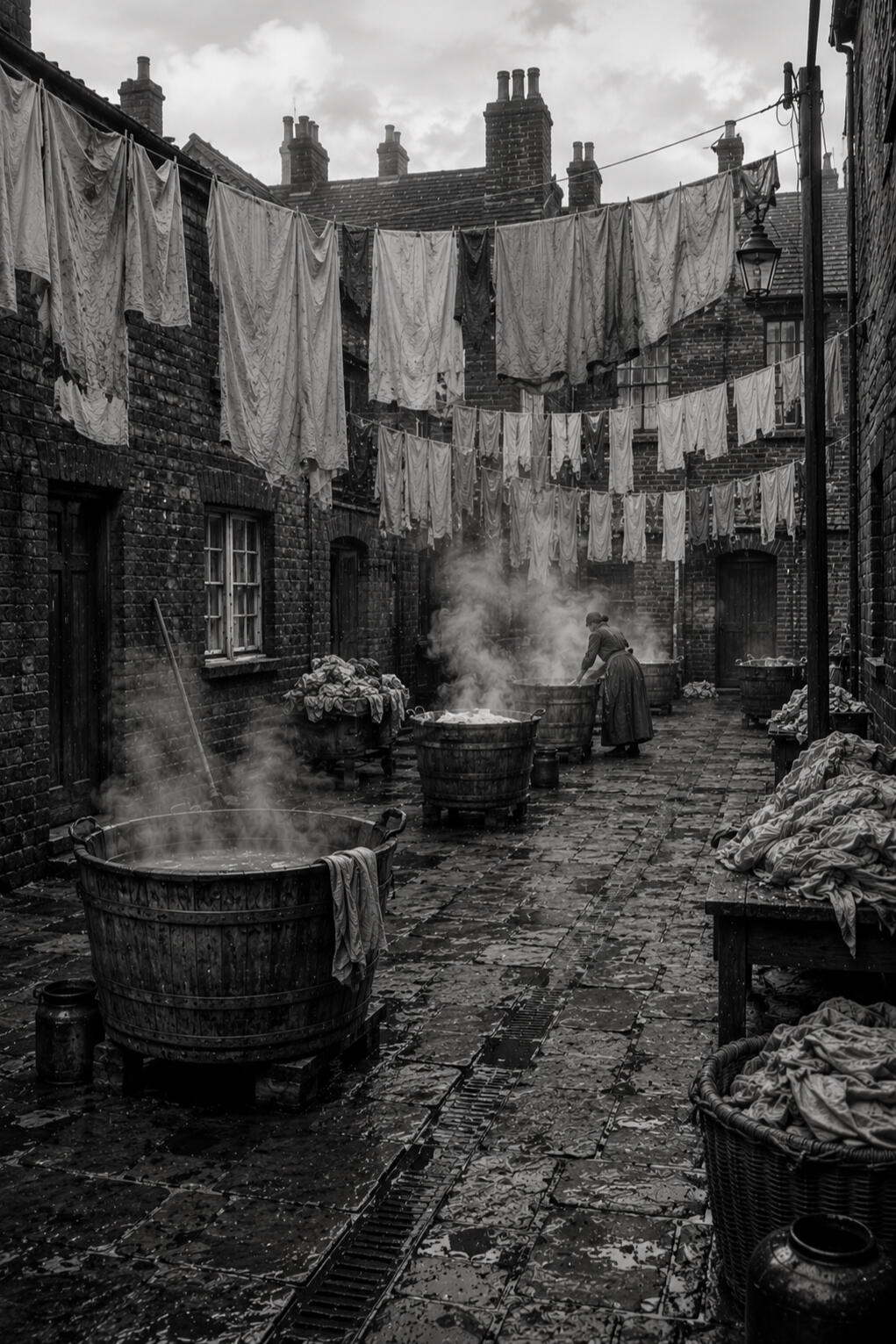
The Washing (1957)
A woman's work
In a cramped courtyard behind a row of Wigan terraced houses, washing hangs from a maze of lines stretched between the surrounding buildings.Below, great wooden tubs release clouds of steam into the cold Lancashire air, while a solitary woman bends over her work.Ballantyne's photograph reveals the extraordinary physical demands of an ordinary domestic task. The enormous quantities of linen, heavy tubs and overflowing baskets speak of hours of labour, much of it performed outdoors regardless of the weather.The hanging sheets create a remarkable pattern of light and shadow, transforming the confined yard into an almost theatrical setting. Against the towering brick walls, the woman appears small, yet it is her labour that gives the scene its meaning.The Washing is a tribute to the largely unrecognised work of generations of Northern women, whose daily routines sustained households and families long before domestic convenience could be taken for granted.
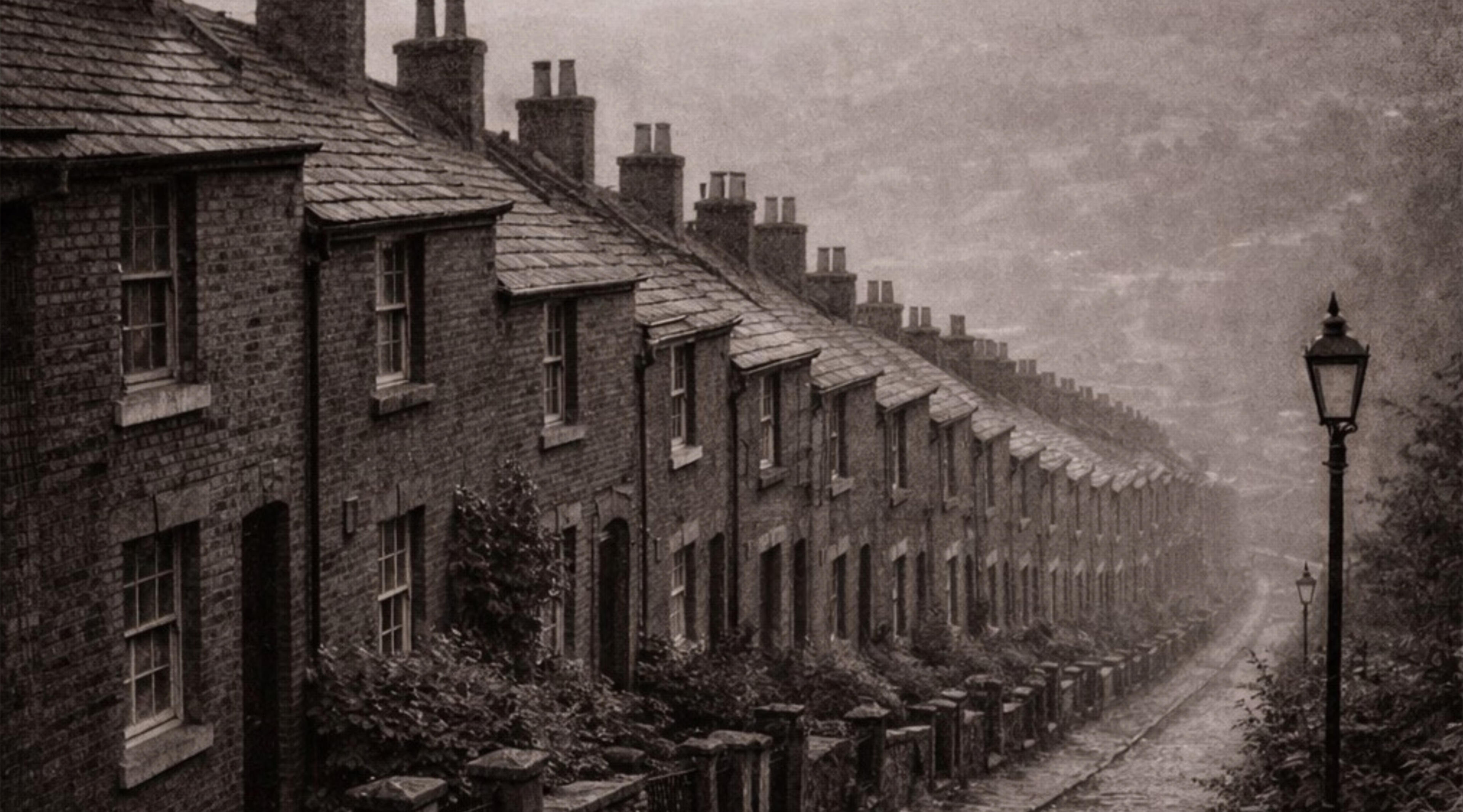
The Row (1961)
Strength in numbers
A seemingly endless terrace of brick houses stretches down a hillside in Wigan, its repeating rooftops and chimney stacks disappearing into the distant haze. A solitary gas lamp stands beside the deserted street, while the hills beyond provide a faint reminder of the countryside surrounding the industrial town.Ballantyne's elevated viewpoint transforms an ordinary residential street into a remarkable study of rhythm and repetition. The identical doorways, windows and chimneys create a powerful geometric pattern, interrupted only by the occasional patch of greenery.Yet behind these uniform façades lay hundreds of individual lives. Each house contained its own routines, ambitions, hardships and celebrations, forming the closely connected communities that characterised working-class Lancashire.The Row captures both the architectural uniformity and the human individuality of Northern terraced housing, finding quiet grandeur in streets built not to impress, but simply to provide somewhere to call home.
Have you chosen your favourite?Select your print and preferred size, then complete your purchase securely through Stripe.
All prices include packaging and delivery to your door.